
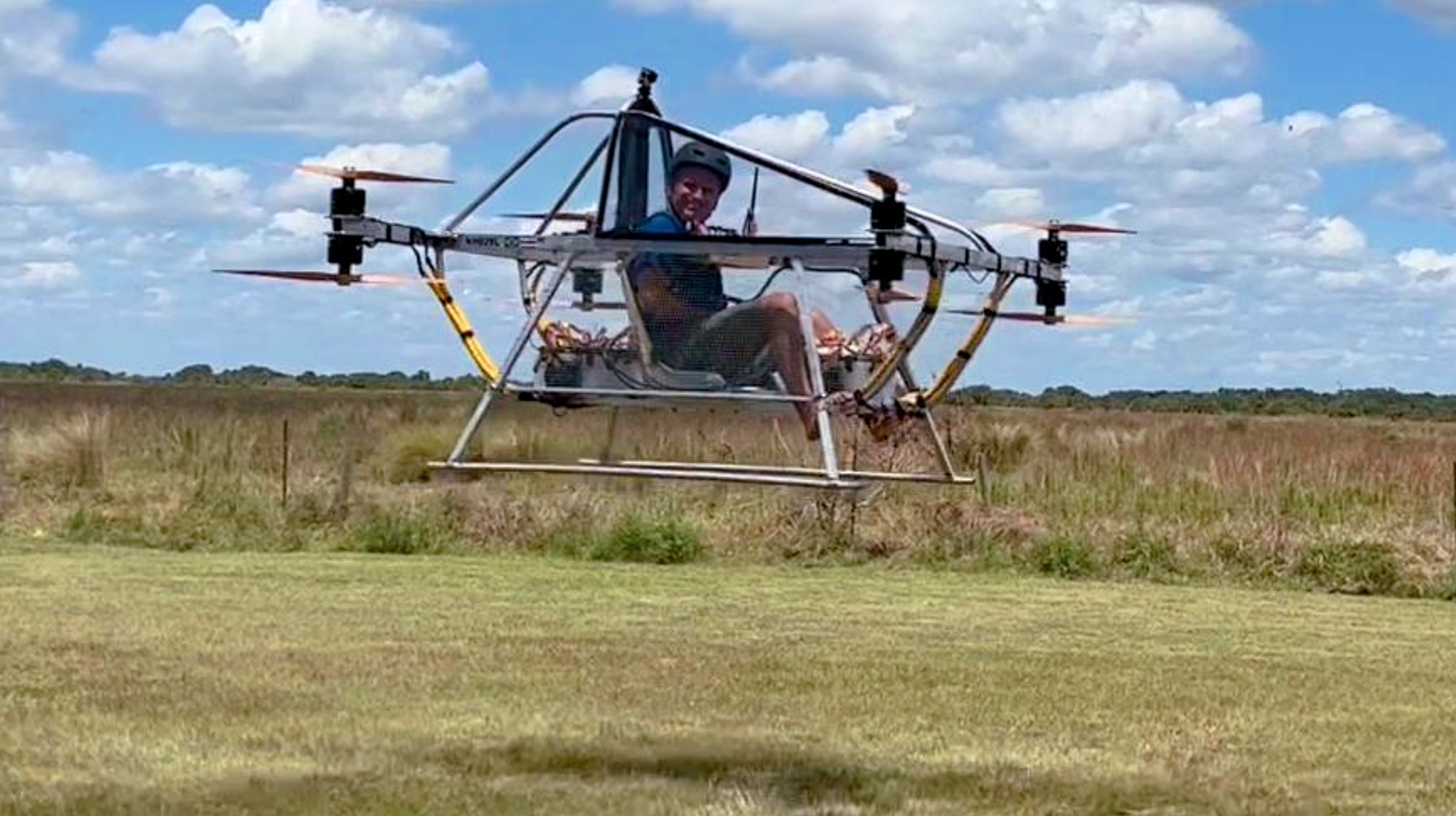
The HDP03 is a single-seat electric vertical takeoff and landing aircraft – an eVTOL – developed by Marcelo Lavrador with his friend and collaborator Alvaro Calvo. This is the third and final prototype of The Human Drone Project, which brought together a custom-built aluminum airframe, commercially available hobby components, and specially developed software. The challenge was to build a human-carrying flying machine in Lavrador’s home garage,using hobby components intended for small drones and other resources available in the consumer market.
Despite its name, the Human Drone was not limited to unmanned flights. HDP03 could be operated remotely from the ground or controlled by a pilot seated inside the aircraft, using either a radio transmitter or adapted video-game controls.
An idea born in a museum
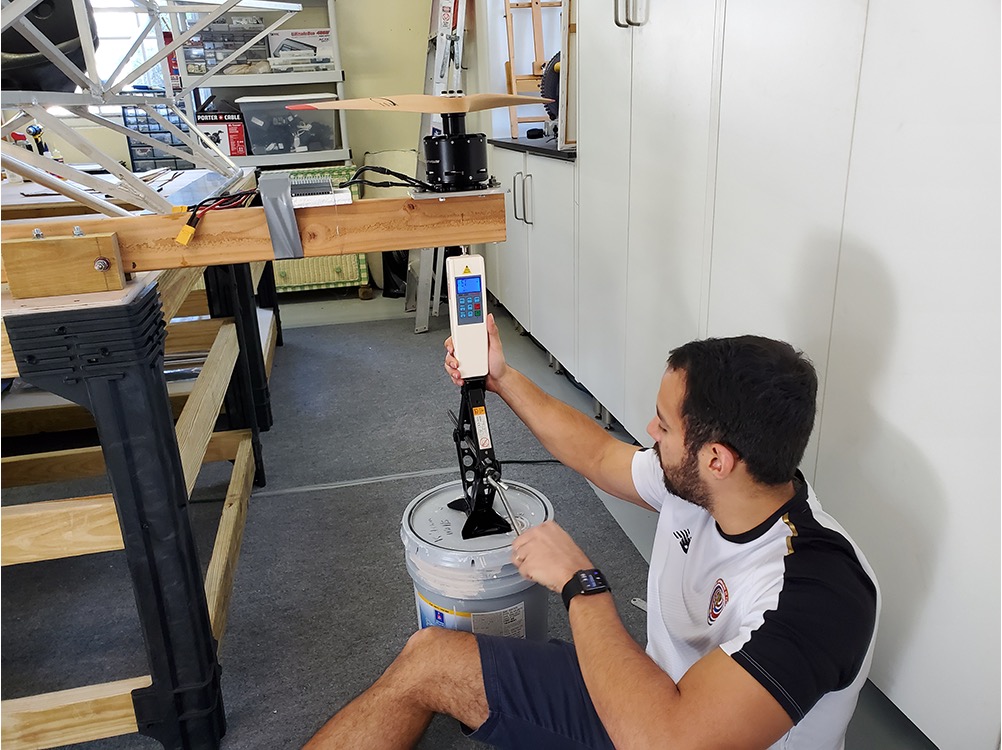
The project’s inspiration came during a July 2019 visit to the historical aviation section of the Deutsches Museum. Lavrador was fascinated not only by the aircraft, but also by the people behind them – particularly the lesser-known inventors whose determination and experiments contributed to aviation’s development, even when their efforts did not achieve lasting recognition. He wanted to experience that process himself: designing, building, testing, and learning for the p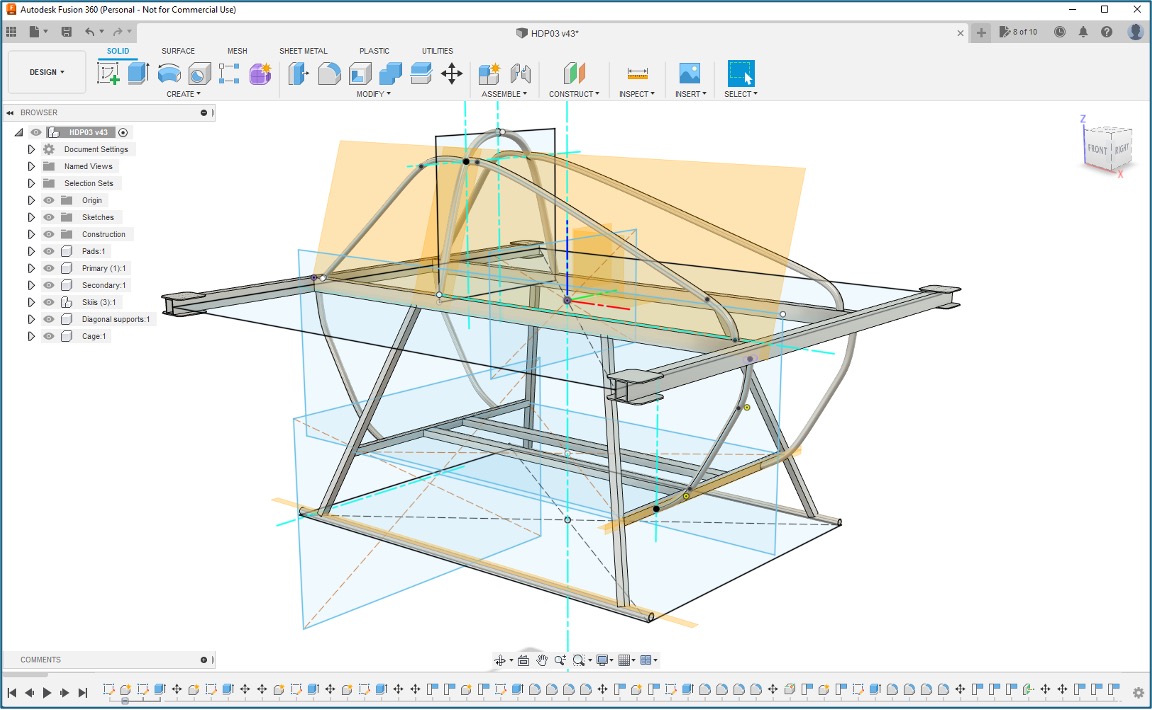 leasure of engineering. Calvo agreed to collaborate on the project, and the work began. Development progressed from a small-scale drone to three full-size prototypes. Early flights were conducted without a person aboard, allowing the team to explore the aircraft’s behavior and refine its design. The path included setbacks: damage sustained during testing of the first and second prototypes (HDP01 and HDP02) required replacement frames and provided further lessons for the development of HDP03.
 HDP03 was assembled in March 2021 and underwent hovering tests that month. In June 2021, it achieved the project’s first flight with a person aboard. The initial flight was deliberately brief, but it marked the transition from a remotely controlled experiment to a human-carrying aircraft. Lavrador described the sensation as “kayaking, but above the grass in my backyard.”
Eight motors and a custom-built cockpit
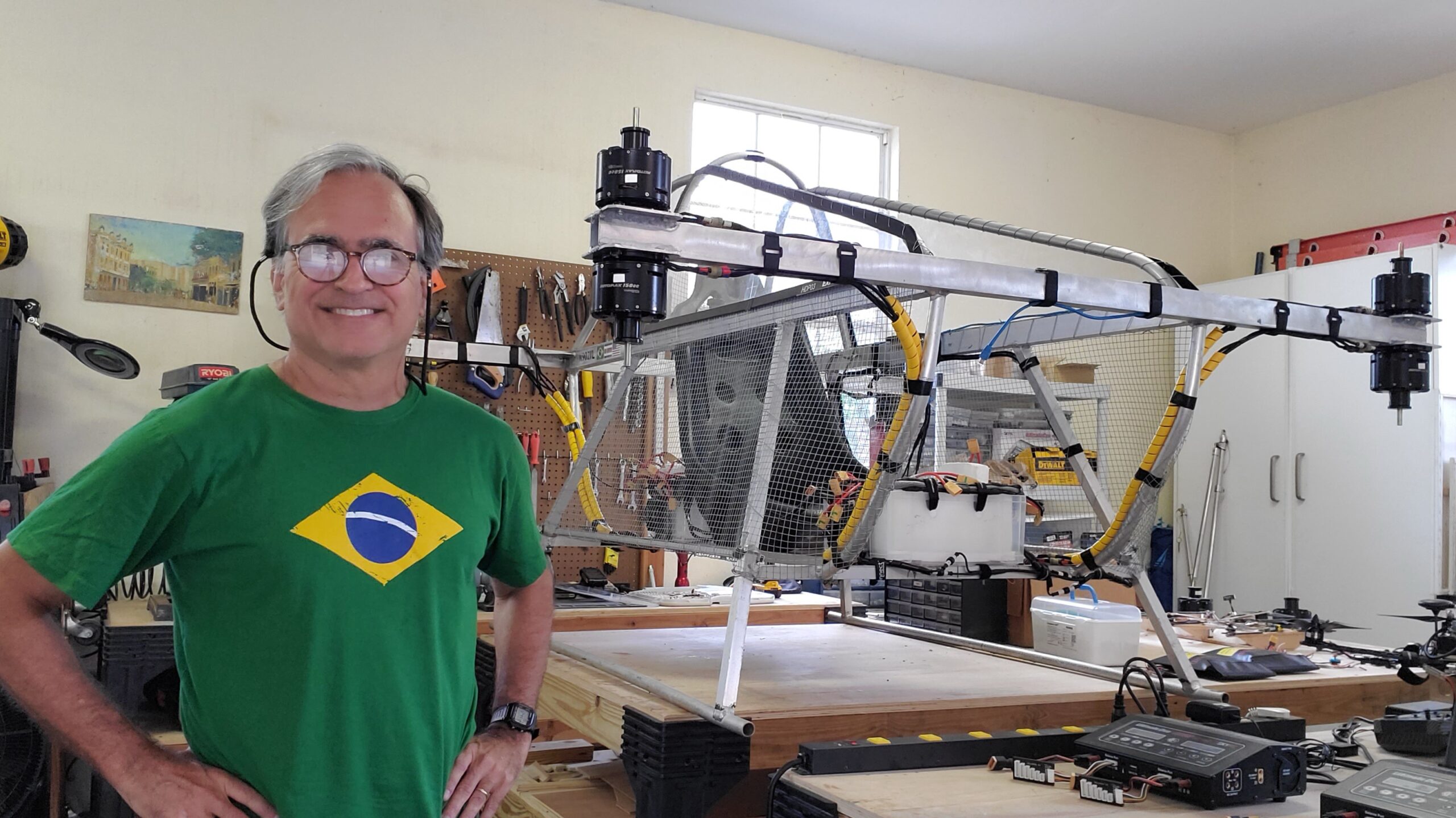 HDP03 uses an “octoquad” configuration: eight electric motors and propellers arranged in four vertically stacked, counter-rotating pairs. This arrangement evolved from the first prototype’s six-motor layout, increasing the number of motors while allowing a compact supporting structure. The airframe is constructed from TIG-welded 6061-T6 aluminum. Wire mesh and plexiglass barriers were added around the cockpit as part of the project’s pilot-protection measures.
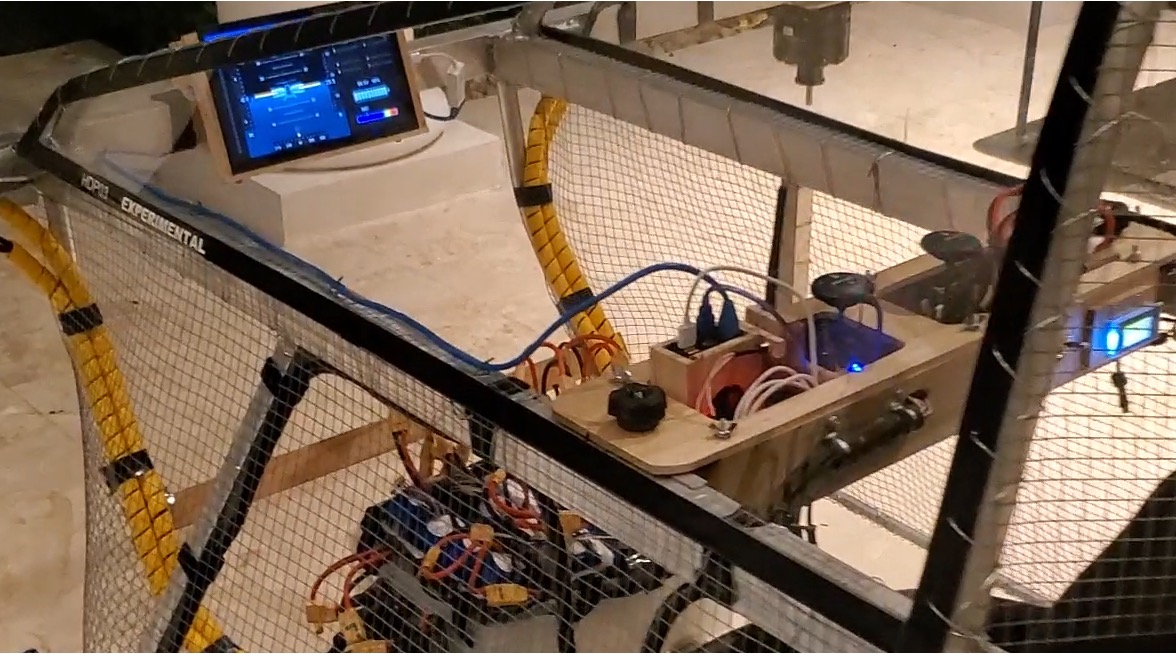 The battery system offered another example of the project’s resourceful approach. When suitable 14S battery packs could not be easily found, Lavrador connected commercially available 7S packs in series-connected pairs. Each pair formed the equivalent of a 14S pack, providing the approximately 52 volts nominal required by the propulsion system. Sixteen of these pairs were then connected in parallel, combining their capacity while maintaining the same voltage. The complete system used 32 individual battery packs.
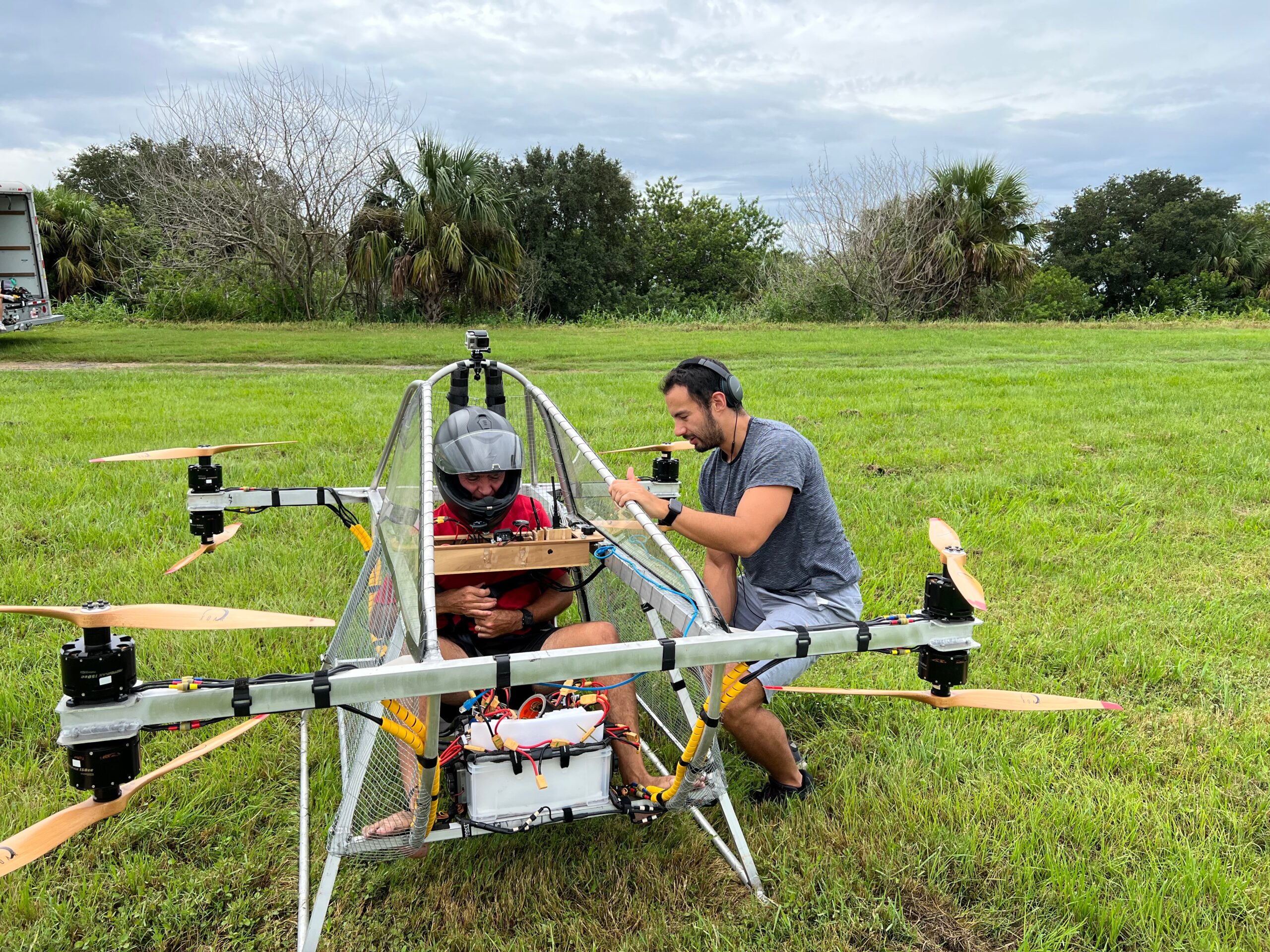 The work extended well beyond the airframe and power system. Lavrador developed a digital flight panel, telemetry interfaces, and an onboard control system. An iPad displayed a custom web application hosted by a Raspberry Pi 4 computer. The flight-display software included a specially designed artificial horizon and individual motor-speed indications, making the aircraft’s operation visible to the pilot.
One of the final developments was adapting video-game controls to fly the aircraft. A microcontroller interfaced the controls with the flight controller, while a radio-control system remained available to an operator on the ground. The team developed ways to transfer control between the cockpit and ground operator, including an automatic return to radio control if communication between the joystick system and flight controller was interrupted. A short piloted flight using this system was reported in September 2022.
From inspiration to exhibit
By October 2022, Lavrador considered his original challenge accomplished. HDP03 had become a flying demonstration of what could be designed, assembled, and integrated using hobby parts and relatively inexpensive components. Additional instruments, controls, and cockpit protections had also brought the aircraft to the weight limit previously estimated, leaving little room for further additions. Lavrador announced that it was time to retire the third prototype.
Its donation to the Wings of History Air Museum brings the story full circle. An aircraft inspired by a visit to an aviation museum can now help tell the story of hands-on experimentation to another generation. HDP03 represents not only an exploration of electric flight, but also the curiosity, collaboration, and persistence that turn an idea into a flying machine